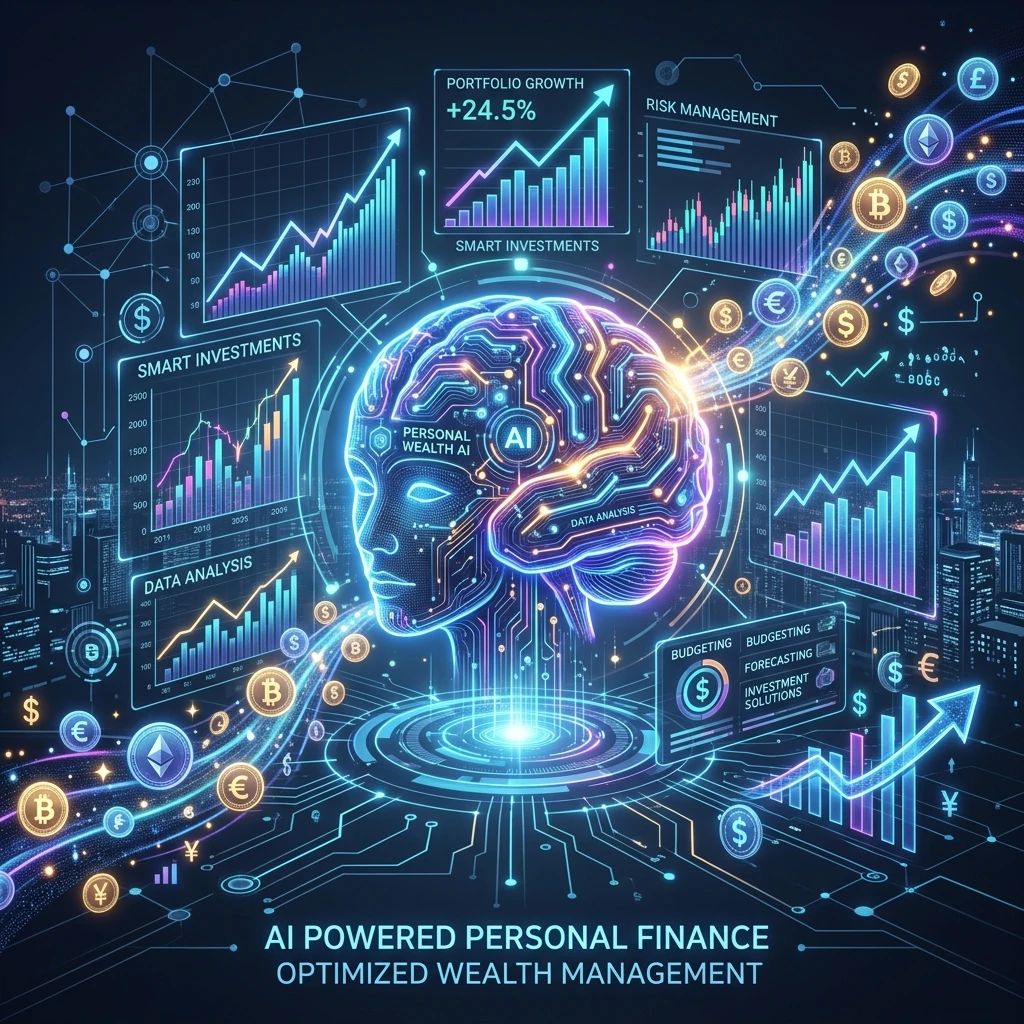
For decades, wealth management relied heavily on personal relationships.
Clients met advisors in person, reviewed printed portfolio reports, signed paperwork manually, and waited days—or sometimes weeks—for investment recommendations or financial plans to be updated. Technology gradually digitized these processes, but much of the underlying workflow remained dependent on human effort.
Artificial intelligence is changing that model.
In 2026, AI automation is becoming an operational layer across wealth management rather than a standalone feature. Financial advisors are using AI to organize client data, summarize meetings, identify portfolio risks, automate administrative work, improve compliance workflows, and provide faster responses to client inquiries. Wealth management firms, meanwhile, are using AI to increase advisor productivity without sacrificing the personalized service that high-net-worth clients expect.
The transformation is significant, but it is also nuanced. AI is not replacing experienced financial advisors. Instead, it is reducing operational friction, allowing advisors to spend more time on strategic planning, relationship management, and complex financial decisions that require human judgment.
- 1Wealth Management Is Becoming More Data Intensive
- 2Administrative Work Has Become One of the Biggest Opportunities
- 3Better Client Conversations Begin Before the Meeting
- 4Portfolio Monitoring Is Becoming More Continuous
- 5Personalization at Scale
- 6AI Is Supporting Investment Research
- 7Compliance Is Becoming More Efficient
- 8Clients Expect Faster Service
- 9Risk Management Is Becoming More Proactive
- 10AI Is Improving Financial Planning Workflows
- 11Better Reporting Creates Better Conversations
- 12Cybersecurity and Privacy Cannot Be Overlooked
- 13The Human Advisor Remains Central
- 14Measuring the Return on AI Investment
- 15Common Mistakes During AI Adoption
- Automating Every Process
- Poor Data Quality
- Lack of Employee Training
- Ignoring Regulatory Requirements
- 16Building an AI-Enabled Wealth Management Firm
- 17Looking Beyond 2026
- 18Final Perspective
- 19Frequently Asked Questions
- Can AI replace wealth managers?
- Is AI safe for wealth management?
- Which wealth management tasks benefit most from AI?
Wealth Management Is Becoming More Data Intensive
Every client generates a growing volume of financial information.
Investment portfolios.
Retirement accounts.
Tax records.
Insurance policies.
Estate planning documents.
Cash-flow reports.
Market research.
Regulatory disclosures.
Managing this information manually becomes increasingly difficult as firms expand their client base.
AI automation helps organize and analyze these datasets more efficiently, making relevant information easier to retrieve when advisors prepare for client meetings or conduct portfolio reviews.
Instead of spending hours locating documents across multiple systems, advisors can focus on interpreting the information and discussing its implications with clients.
Administrative Work Has Become One of the Biggest Opportunities
Many wealth management firms discover that a significant portion of an advisor’s day is spent on work that does not directly generate revenue.
Typical administrative responsibilities include:
| Administrative Task | How AI Automation Helps |
|---|---|
| Meeting summaries | Generates structured notes and action items |
| Client onboarding | Organizes documents and verifies required information |
| Portfolio reviews | Creates first-draft performance summaries |
| Appointment preparation | Compiles client history and recent activity |
| Follow-up communication | Drafts personalized emails and reminders |
| Internal documentation | Standardizes records for compliance and reporting |
Reducing these repetitive tasks allows advisors to dedicate more time to financial planning and client relationships.
Better Client Conversations Begin Before the Meeting
Preparation often determines the quality of financial advice.
Before every client meeting, advisors typically review:
- Recent portfolio performance.
- Market developments.
- Previous recommendations.
- Outstanding action items.
- Tax considerations.
- Life events affecting financial goals.
AI can organize this information into concise briefing documents, reducing preparation time while ensuring important details are not overlooked.
For example, if a client’s portfolio has become overweight in a particular asset class due to recent market performance, AI can highlight the change before the meeting begins.
The advisor still decides whether portfolio adjustments are appropriate.
AI simply improves visibility.
Portfolio Monitoring Is Becoming More Continuous
Traditionally, many portfolio reviews followed a fixed schedule.
Quarterly.
Semi-annually.
Annually.
AI automation allows firms to monitor portfolios continuously instead.
Rather than waiting for scheduled reviews, systems can identify changes such as:
- Significant portfolio concentration.
- Asset allocation drift.
- Large market movements.
- Cash balances exceeding target levels.
- Unusual transaction activity.
This enables advisors to prioritize clients whose portfolios may require immediate attention rather than reviewing every account identically.
Continuous monitoring improves efficiency without removing human oversight.
Personalization at Scale
One of the biggest challenges facing wealth management firms is maintaining personalized service while serving more clients.
Historically, increasing client volume often meant reducing the amount of time available for each relationship.
AI helps narrow that gap.
By organizing client preferences, financial goals, communication history, and previous recommendations, advisors can quickly refresh their understanding before every interaction.
This makes conversations more relevant without requiring hours of preparation.
Clients benefit from faster responses.
Advisors benefit from improved efficiency.
AI Is Supporting Investment Research
Financial markets generate enormous quantities of information every day.
Economic reports.
Corporate earnings.
Interest rate decisions.
Regulatory announcements.
Industry research.
Analyzing all of this manually is increasingly unrealistic.
AI assists by:
| Research Activity | AI Contribution |
|---|---|
| Market news | Summarizes major developments |
| Earnings reports | Highlights key financial metrics |
| Economic releases | Explains potential market implications |
| Company analysis | Organizes publicly available information |
| Industry trends | Identifies recurring themes across reports |
These summaries help advisors stay informed, but they do not replace independent analysis or professional investment judgment.
Investment decisions should always consider the client’s objectives, risk tolerance, and broader financial circumstances.
Compliance Is Becoming More Efficient
Wealth management operates within highly regulated environments.
Documentation.
Client communications.
Disclosure requirements.
Record retention.
Suitability assessments.
These responsibilities require consistency as much as expertise.
AI automation helps firms organize documentation, identify incomplete records, standardize reporting, and assist compliance teams with routine reviews.
Rather than replacing compliance professionals, AI reduces the administrative workload associated with maintaining regulatory standards.
This allows specialists to focus on higher-risk situations that require detailed human assessment.
Clients Expect Faster Service
Digital experiences have changed client expectations across nearly every industry.
Wealth management is no exception.
Clients increasingly expect:
- Faster answers.
- Digital document access.
- Timely portfolio updates.
- Personalized communication.
- Simplified financial explanations.
AI-powered assistants can support these expectations by answering routine questions, locating documents, scheduling appointments, and preparing information for advisors.
Complex financial planning discussions, however, continue to benefit from direct interaction with experienced professionals.
The value of AI lies in accelerating service—not replacing trusted relationships.
Risk Management Is Becoming More Proactive
One of AI’s most valuable contributions to wealth management is its ability to monitor large volumes of financial data continuously.
Instead of relying solely on scheduled portfolio reviews, AI systems can identify patterns that deserve an advisor’s attention.
Examples include:
- Portfolios drifting from target asset allocations.
- Unexpected concentration in a single sector.
- Significant cash positions remaining uninvested.
- Changes in market volatility affecting portfolio risk.
- Client behavior that differs from historical patterns.
These insights do not automatically trigger investment decisions. Rather, they help advisors identify situations that may warrant further discussion with clients.
The final recommendation remains a human responsibility.
AI Is Improving Financial Planning Workflows
Financial planning involves much more than investment management.
Clients often require guidance related to:
- Retirement planning.
- Education funding.
- Insurance strategies.
- Estate planning.
- Cash-flow management.
- Tax efficiency.
- Charitable giving.
Preparing comprehensive financial plans traditionally required significant manual analysis and document preparation.
AI can reduce that workload by organizing financial information, summarizing planning assumptions, identifying missing documentation, and generating first drafts of financial reports.
This enables advisors to spend more time explaining recommendations and less time preparing paperwork.
Better Reporting Creates Better Conversations
Portfolio reports have historically focused on numbers.
Returns.
Balances.
Asset allocation.
Performance.
Clients increasingly expect more context.
Instead of simply stating that a portfolio gained or lost value, AI-assisted reporting can organize information into narratives that explain:
- What changed.
- Why it changed.
- Which factors influenced performance.
- What risks should be monitored.
- Which questions deserve discussion during the next review.
Reports become easier to understand without reducing their analytical depth.
Cybersecurity and Privacy Cannot Be Overlooked
The same technologies that improve efficiency also increase the importance of protecting sensitive financial information.
Wealth management firms handle:
- Investment accounts.
- Tax records.
- Personal identification documents.
- Banking information.
- Estate planning records.
- Family financial details.
Before integrating AI into client workflows, firms should establish clear governance covering:
| Governance Area | Why It Matters |
|---|---|
| Data access controls | Restricts sensitive information to authorized personnel. |
| Encryption | Protects financial records during storage and transmission. |
| Audit logging | Creates accountability for system activity. |
| Employee training | Reduces security risks caused by human error. |
| AI governance policies | Defines acceptable uses of AI within the organization. |
| Vendor assessments | Evaluates third-party technology providers before adoption. |
Operational efficiency should never compromise client confidentiality.
The Human Advisor Remains Central
Predictions that AI will replace financial advisors overlook one important reality.
Wealth management extends far beyond investment selection.
Clients seek advice during:
- Retirement.
- Business sales.
- Inheritance.
- Divorce.
- Career changes.
- Major purchases.
- Economic uncertainty.
These conversations involve personal priorities, emotional decision-making, family dynamics, and long-term planning.
AI can organize information.
It cannot replace trust.
The advisor’s role is increasingly shifting from information provider to strategic decision partner.
Measuring the Return on AI Investment
Firms adopting AI should evaluate success using measurable business outcomes rather than technology adoption alone.
Useful metrics include:
| KPI | Business Value |
|---|---|
| Advisor hours saved | Measures administrative efficiency. |
| Client response time | Indicates service quality improvements. |
| Client retention | Reflects relationship strength. |
| New clients per advisor | Measures scalability. |
| Meeting preparation time | Demonstrates workflow improvements. |
| Compliance processing time | Tracks operational efficiency. |
| Client satisfaction | Evaluates service experience. |
These indicators help determine whether AI is producing meaningful operational improvements.
Common Mistakes During AI Adoption
Early AI initiatives often encounter similar challenges.
Automating Every Process
Not every workflow benefits from automation.
High-value client relationships still require personal interaction, thoughtful planning, and professional judgment.
Poor Data Quality
AI systems depend on accurate information.
Duplicate client records, incomplete documentation, and inconsistent financial data reduce the quality of generated insights.
Lack of Employee Training
Even sophisticated AI tools produce limited value if advisors do not understand how to use them effectively.
Training should cover not only software functionality but also governance, privacy, and responsible AI use.
Ignoring Regulatory Requirements
AI implementation should involve compliance, legal, and technology teams from the beginning rather than being treated as an isolated technology project.
Building an AI-Enabled Wealth Management Firm
Successful implementation rarely happens all at once.
A phased approach often produces better results.
| Phase | Primary Objective |
|---|---|
| Phase 1 | Digitize client documentation and internal workflows. |
| Phase 2 | Automate repetitive administrative tasks. |
| Phase 3 | Introduce AI-assisted research and reporting. |
| Phase 4 | Enhance client communication with AI-supported workflows. |
| Phase 5 | Expand analytics and operational insights across the organization. |
Each phase creates operational improvements while allowing teams to adapt gradually.
Looking Beyond 2026
Artificial intelligence is expected to become increasingly integrated into wealth management software rather than existing as a separate capability.
Future systems are likely to assist advisors by:
- Monitoring portfolios continuously.
- Identifying planning opportunities.
- Coordinating client communications.
- Generating personalized financial education.
- Supporting cross-functional collaboration between advisors, tax professionals, and estate planners.
The competitive advantage will depend less on having access to AI and more on how effectively firms integrate it into everyday operations.
Final Perspective
AI automation is reshaping wealth management by improving operational efficiency rather than replacing professional expertise. Advisors spend less time preparing reports, organizing documents, and completing administrative tasks, allowing them to focus on the areas where human judgment creates the greatest value: understanding client goals, interpreting complex financial situations, and building long-term relationships.
For wealth management firms, the opportunity extends beyond cost reduction. AI supports scalable personalization, faster service, improved compliance workflows, and more informed decision-making across the organization. Firms that combine these capabilities with strong governance, high-quality data, and experienced advisors are likely to deliver a more responsive and resilient client experience.
The future of wealth management is unlikely to be fully automated or entirely human-driven. Instead, it will be defined by collaboration, where AI handles repetitive analysis and operational processes while advisors provide the strategic insight, empathy, and trust that remain essential to successful financial planning.
Frequently Asked Questions
Can AI replace wealth managers?
No. AI improves operational efficiency but investment advice and financial planning still require experienced professionals.
Is AI safe for wealth management?
AI can improve workflows, but firms should implement strong governance, encryption, and compliance controls before using AI with sensitive financial information.
Which wealth management tasks benefit most from AI?
Administrative documentation, meeting summaries, portfolio monitoring, research organization, compliance support, and client communication workflows.