- 1Key Takeaways
- 2Table of Contents
- 3What is AI in Real Estate?
- 4How AI Automation Works in Property Management
- 5Top AI Real Estate Use Cases
- Conversational AI Agents
- Automated Predictive Valuations
- AI-Powered Virtual Staging
- 6Real-World Property Case Studies
- Case Study: The Multi-Family Brokerage
- Case Study: The Suburban Home Seller
- 7Pros & Cons of Real Estate AI
- 8Comparison Table: AI vs. Traditional Real Estate
- 9Expert Insights
- 10Frequently Asked Questions (FAQ)
- 11Conclusion
Key Takeaways
- Lead Generation: AI agents qualify buyers and sellers around the clock, scheduling appointments automatically.
- Valuation Models: Machine learning algorithms analyze market trends to provide instant, hyper-accurate home valuations.
- Document Automation: Smart contracts and AI processing reduce paperwork time from weeks to minutes.
- Virtual Staging: Generative AI creates photorealistic room designs instantly, reducing staging costs by 90%.
What is AI in Real Estate?
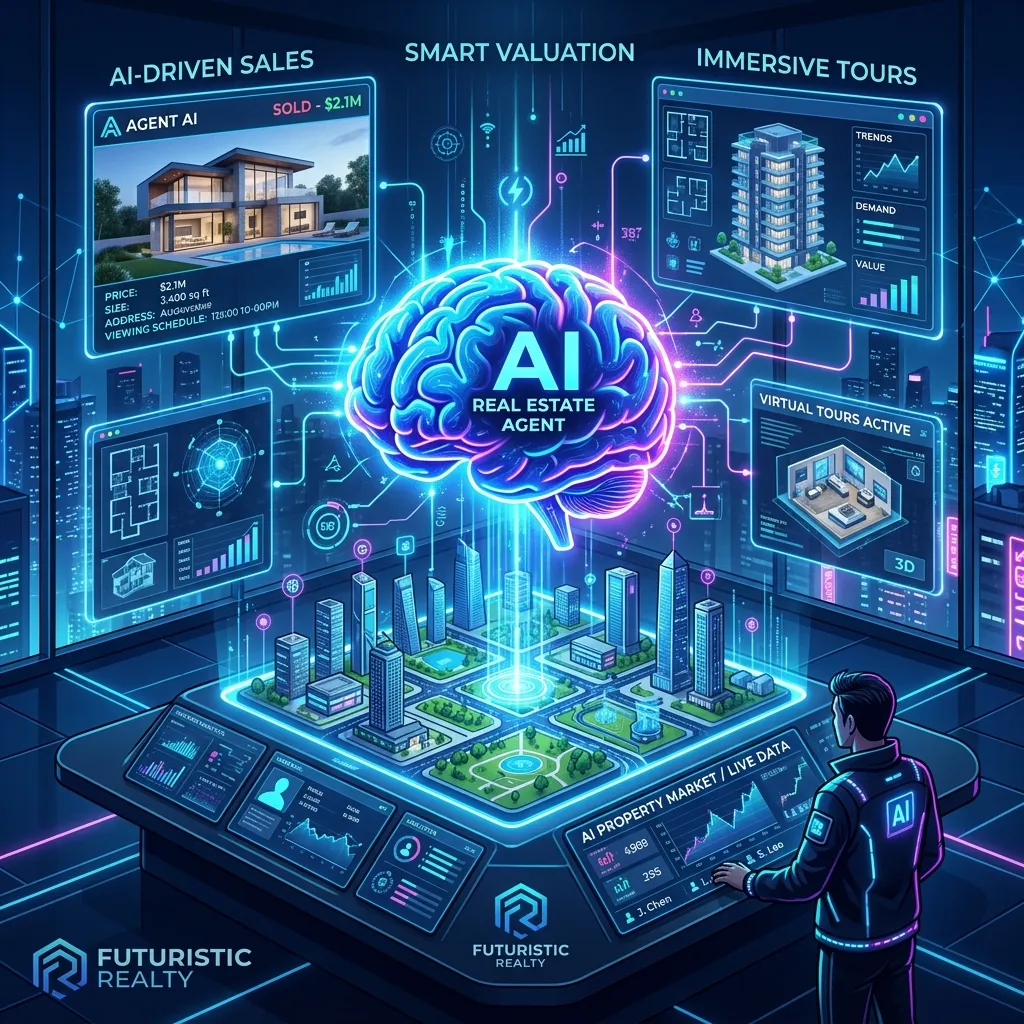
Real estate is one of the largest asset classes in the world, yet it has historically lagged in adopting modern technologies. In 2026, AI in Real Estate (PropTech AI) has shifted from a luxury to an operational necessity. Brokers, developers, and property managers are leveraging artificial intelligence to automate manual administrative tasks, streamline sales pipelines, and analyze complex market datasets.
AI doesn’t replace the human touch of a skilled agent; instead, it acts as a digital force multiplier. It handles lead triage, schedules property viewings, and performs financial calculations so that agents can focus on building relationships and closing deals.
How AI Automation Works in Property Management
Automating real estate operations typically follows a structured flow:
1. Lead Capturing: A potential buyer visits a property website at midnight. An AI assistant greets them, registers their budget and neighborhood preferences, and confirms if they are pre-approved for a mortgage.
2. Predictive Analysis: The AI cross-references similar listings, historic sale data, and municipal plans to evaluate the long-term yield of the property.
3. Transaction Execution: Smart contracts verify and format legal disclosures, automatically flag missing signatures, and prepare final closing folders.
[!TIP]
PropTech Tip: While AI-driven valuation models are exceptionally fast, always review local zoning laws and physical inspection reports manually. AI cannot smell mold or see structural cracks that aren’t logged in data feeds.
Top AI Real Estate Use Cases
Conversational AI Agents
AI-driven chatbots handle parent-like handholding for first-time buyers. They answer immediate neighborhood questions, supply local school ratings, and estimate commute times without requiring human broker intervention.
Automated Predictive Valuations
Computer models process millions of data points, including school quality, noise levels, and economic growth, to determine the most accurate market price for any property. This dramatically cuts down the time required for traditional appraisals.
AI-Powered Virtual Staging
Rather than hiring physical furniture rental services which cost thousands of dollars, agents use generative AI to stage empty rooms. Simply upload a picture of an empty room, select a design style (e.g., modern, rustic), and the AI renders a beautiful, staged room in seconds.
Real-World Property Case Studies
Case Study: The Multi-Family Brokerage
The Challenge: A brokerage managing 500 apartment units was losing qualified tenants due to slow response times for rental inquiries.
The AI Solution: They integrated an automated text-message AI agent to qualify prospective tenants and book tours.
The Result: Booked tours increased by 40%, and vacancy rates fell to an all-time low of 2% within three months.
Case Study: The Suburban Home Seller
The Challenge: A homeowner needed to sell a house quickly but had no budget for physical staging.
The AI Solution: The agent used AI virtual staging to furnish the listing images online.
The Result: The staged listing received 3x more online views, leading to a sale within 10 days at full asking price.
Pros & Cons of Real Estate AI
Pros:
- Drastically decreases the time needed to qualify leads.
- Lowers operational costs for virtual staging and digital tours.
- Provides objective, data-backed insights on market valuations.
Cons:
- May lead to minor errors in automated valuations if municipal databases are outdated.
- Risks losing the highly personal human touch that clients expect during major life transactions.
- Requires continuous monitoring to prevent digital bias in lending data.
Comparison Table: AI vs. Traditional Real Estate
| Feature | Traditional Real Estate | AI-Augmented Real Estate |
|---|---|---|
| Lead Qualification | Manual phone calls (hours/days) | Automated chat qualification (instant) |
| Property Valuations | Manual appraisal (3-7 days) | Algorithm valuation (seconds) |
| Property Staging | Physical furniture rental ($2k+) | Generative AI staging ($20/month) |
| Document Processing | Manual signature checks | Smart contract auto-flagging |
Expert Insights
“Artificial intelligence isn’t replacing real estate agents. However, agents who use AI will replace those who do not. The technology allows us to scale our outreach while spending more quality time on the closing table.” — Himanshu, Senior AI Automation Engineer
Frequently Asked Questions (FAQ)
Can an AI accurately predict home values?
Yes, AI models can be highly accurate by analyzing vast amounts of local data. However, unique features (like custom renovations or views) still require human validation.
Is AI legal to use for contract review?
AI can review agreements to highlight missing clauses or anomalies, but final signing and verification must be approved by licensed legal experts.
Does AI virtual staging deceive buyers?
No, as long as it is labeled as virtual staging. It is a standard industry practice designed to help buyers visualize a space’s potential.
Conclusion
The real estate market is transforming rapidly under the influence of AI Automation. By utilizing intelligent workflows for client interaction, staging, and valuation, brokers and property managers are discovering how to scale their businesses with lower overhead. Integrate these modern AI Tools into your brokerage today to secure a competitive advantage in the future property market.