A small marketing team sits in a coworking space in Bengaluru at 9:42 PM. Coffee cups everywhere, laptop screens glowing, someone muttering about ad spend that “just keeps leaking.”
Two years ago, this team would still be manually adjusting Facebook ads, checking Google Analytics tabs, exporting Excel sheets, trying to guess which headline might convert better.
Tonight, something different is happening.
One person isn’t touching ads at all. He is watching an AI system quietly restructure the entire campaign—budget shifting between platforms, creatives rotating, audience segments refining themselves in real time.
Nobody in the room is clicking “optimize.”
It’s already happening.
This is digital marketing in 2026 when automation stops being a feature and becomes the operating system.
- 1Campaigns don’t “run” anymore. They evolve.
- 2A real campaign story from Mumbai that changed how a brand thought about ads
- 3What AI in digital marketing actually does (beyond buzzwords)
- 1. Audience intelligence engines
- 2. Creative optimization systems
- 3. Budget distribution logic
- 4. Predictive conversion modeling
- 5. Content generation support
- 4The part nobody tells beginners: automation doesn’t fix bad strategy
- 5Myths vs reality in AI-driven marketing
- Myth: AI replaces marketers
- Myth: Automation means no human input
- Myth: More data always improves performance
- Myth: Every platform AI works the same
- 6Where AI is genuinely dominating digital campaigns in 2026
- E-commerce advertising
- Performance marketing funnels
- Programmatic ad buying
- Content scaling for ads
- 7A comparison that explains the shift better than theory
- 8The risks nobody in marketing dashboards likes to highlight
- 1. Over-optimization trap
- 2. Creative sameness
- 3. Blind trust in metrics
- 4. Platform dependency
- 5. Data bias
- 9The real job of a digital marketer is changing quietly
- 10Practical reality: how teams actually use AI today
- 11An opinion that might be unpopular but matters
- 12A simple but powerful takeaway for marketers
- 13Final reflection
Campaigns don’t “run” anymore. They evolve.
Traditional digital marketing was built on control. You set a budget, choose targeting, design creatives, and monitor performance like a pilot manually adjusting every dial.
AI has quietly changed that logic.
Now campaigns behave less like machines and more like adaptive organisms.
They:
- test multiple ad variations simultaneously
- adjust bids every few seconds
- rewrite messaging based on engagement signals
- shift budget toward high-performing audiences automatically
A marketer is no longer steering every move. They are setting boundaries, not directions.
And that distinction is bigger than it sounds.
A real campaign story from Mumbai that changed how a brand thought about ads
A mid-sized D2C skincare brand in Mumbai launched a summer campaign for sunscreen products. Nothing unusual—Meta ads, Google Search ads, influencer tie-ins.
But this time, they used an AI-driven campaign automation tool that handled optimization continuously.
At first, the team was skeptical. One strategist even said, “We’ll lose control of brand messaging.”
What actually happened surprised them.
The AI noticed something subtle: younger audiences were engaging more with “anti-pollution” messaging than “sun protection” messaging—even though the product was the same.
Within 48 hours, ad creatives shifted automatically:
- “Protect your skin from UV rays” became secondary
- “Fight urban pollution damage daily” became primary
Conversions increased by 34% in a week.
No human sat and brainstormed that pivot.
The system observed it.
That’s the uncomfortable power of modern campaign automation—it reacts faster than meetings can even form.
What AI in digital marketing actually does (beyond buzzwords)
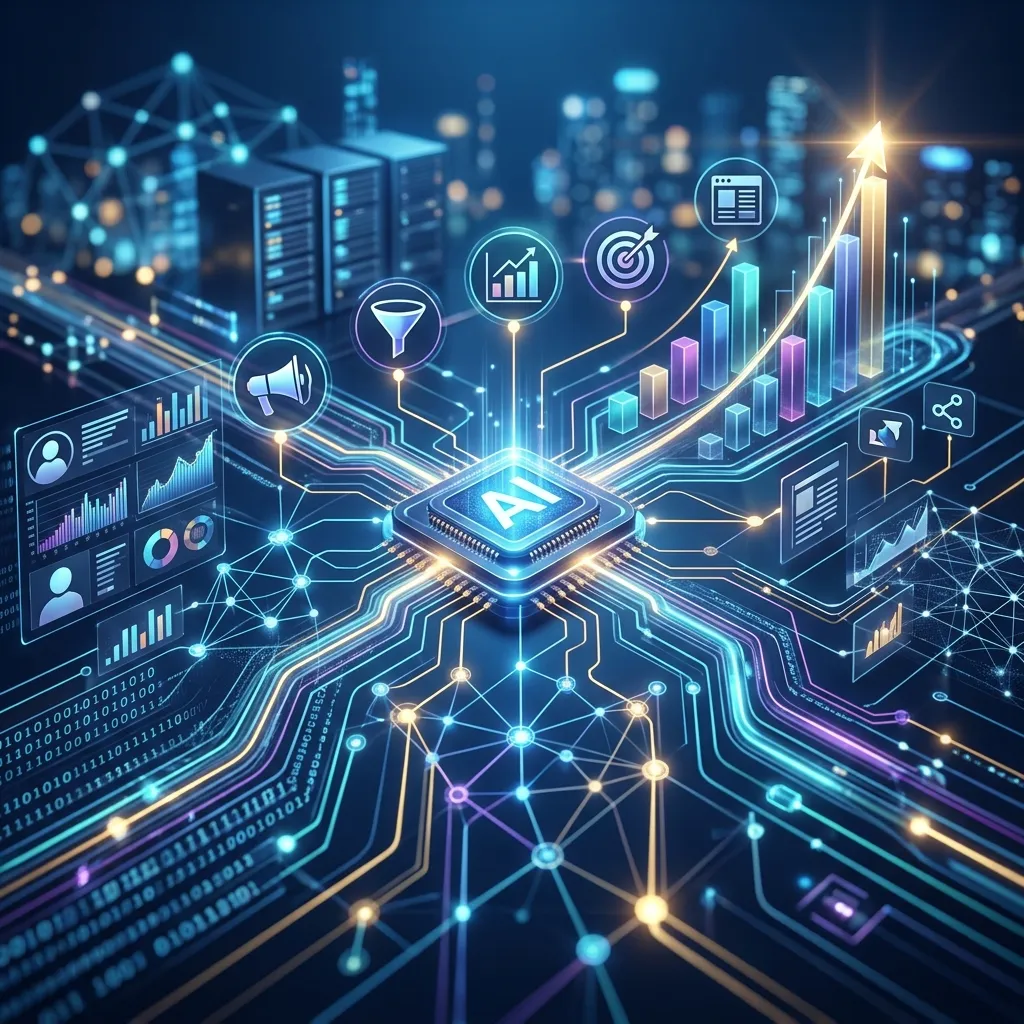
Strip away the hype, and AI in marketing today operates in five core layers.
1. Audience intelligence engines
Instead of static targeting, AI builds evolving audience clusters based on behavior patterns rather than demographics alone.
Age and location matter less than intent signals.
2. Creative optimization systems
Ad creatives are no longer “fixed assets.” AI tests:
- headlines
- visuals
- CTAs
- color combinations
- even emotional tone
And keeps only what performs.
3. Budget distribution logic
Money no longer sits still. It flows dynamically between:
- platforms (Google, Meta, YouTube, etc.)
- campaigns
- audience groups
based on return signals.
4. Predictive conversion modeling
Instead of reacting to conversions, systems now estimate probability:
“this user has a 72% chance of converting within 3 days.”
5. Content generation support
Not full replacement of marketers—but rapid drafting of:
- ad copy variations
- landing page sections
- email sequences
Human editing still matters, but the blank page problem is disappearing.
The part nobody tells beginners: automation doesn’t fix bad strategy
There’s a dangerous assumption floating around that AI will “improve marketing results automatically.”
It won’t.
If your product positioning is weak, AI will optimize weak outcomes faster.
If your audience is wrong, AI will scale wrong targeting more efficiently.
One performance marketer in Delhi put it bluntly:
“AI doesn’t save bad campaigns. It exposes them faster.”
That’s a critical shift.
Speed is no longer an advantage unless direction is correct.
Myths vs reality in AI-driven marketing
There’s a lot of noise in this space. Let’s break a few illusions.
Myth: AI replaces marketers
Reality: It replaces repetitive execution, not strategic thinking.
Myth: Automation means no human input
Reality: Human input shifts from constant tweaking to high-level decision-making.
Myth: More data always improves performance
Reality: Without interpretation, more data just increases confusion.
Myth: Every platform AI works the same
Reality: Each ecosystem (Google, Meta, Amazon) has different optimization logic.
Where AI is genuinely dominating digital campaigns in 2026
Some areas are clearly ahead of human manual control now.
E-commerce advertising
Especially in fashion, electronics, and skincare. High-volume testing makes automation extremely effective.
Performance marketing funnels
Landing page testing, email sequences, retargeting—all heavily AI-driven.
Programmatic ad buying
Real-time bidding systems are almost entirely algorithmic now.
Content scaling for ads
Brands run hundreds of variations of the same message instead of a few polished creatives.
But interestingly, brand storytelling still resists full automation.
Emotional identity is harder to algorithmically define.
A comparison that explains the shift better than theory
Old digital marketing looked like this:
- Plan campaign
- Launch ads
- Wait for results
- Analyze manually
- Optimize weekly
Modern AI-driven marketing looks like this:
- Define goal
- Set constraints
- Monitor system behavior
- Adjust strategy occasionally
- Let execution self-optimize continuously
The difference is not speed.
It’s who is making micro-decisions.
The risks nobody in marketing dashboards likes to highlight
Automation feels clean until it isn’t.
1. Over-optimization trap
AI can over-focus on short-term conversions and ignore long-term brand value.
2. Creative sameness
If everyone uses similar optimization models, ad content starts feeling strangely uniform.
3. Blind trust in metrics
Marketers may start believing numbers without questioning context.
4. Platform dependency
When systems are heavily tied to Meta or Google AI layers, independence reduces.
5. Data bias
If early data is skewed, optimization compounds the bias instead of correcting it.
The real job of a digital marketer is changing quietly
The title “media buyer” or “campaign manager” is slowly evolving.
The new role looks more like:
- system designer
- performance strategist
- creative direction lead
- AI behavior interpreter
Less clicking. More thinking.
Less manual optimization. More structural decisions.
One senior marketer from Hyderabad described it simply:
“I don’t run ads anymore. I design systems that run ads.”
That sentence captures the shift perfectly.
Practical reality: how teams actually use AI today
In real agencies and in-house marketing teams, adoption usually follows a pattern.
First stage: AI for copywriting
- ad headlines
- email drafts
- social captions
Second stage: AI for analytics
- dashboards
- performance summaries
- anomaly detection
Third stage: AI for campaign automation
- budget optimization
- audience targeting
- A/B testing automation
Most teams stop somewhere between stage one and two because stage three requires trust—and restructuring how decisions are made.
An opinion that might be unpopular but matters
There’s a growing belief that marketing is becoming “too automated.”
In reality, what’s happening is something different.
Marketing is being stripped of noise.
The unnecessary manual work—the constant tweaking, checking, guessing—is fading.
What remains is harder work:
- understanding human behavior
- building brand clarity
- defining what success actually means
AI doesn’t reduce responsibility. It concentrates it.
Fewer tasks. Bigger decisions.
A simple but powerful takeaway for marketers
If there is one shift worth focusing on in 2026, it’s this:
Stop trying to manually optimize what machines already optimize better.
Instead, invest energy in:
- better creative direction
- sharper audience understanding
- clearer messaging frameworks
- stronger funnel design
Let AI handle repetition.
Let humans handle meaning.
That balance is where performance actually improves.
Final reflection
Digital marketing didn’t become automated overnight.
It slowly stopped being about control and started becoming about coordination.
Campaigns now behave less like tools and more like systems that learn.
Marketers who still try to manually control every lever will feel overwhelmed.
Those who step back and design the structure instead will notice something interesting:
less effort, better outcomes, and a strange sense that the system is doing what they used to do—only faster, and without fatigue.
The job didn’t disappear.
It just moved one level higher.