- 1Key Takeaways
- 2Table of Contents
- 3The Origins of the Rivalry
- 4OpenAI: The Unstoppable Juggernaut
- 5Anthropic: The Methodical Genius
- 6Head-to-Head: Coding and Development
- 7Head-to-Head: Writing and Creative Synthesis
- 8The Enterprise API Landscape
- 9Pros & Cons of Each Ecosystem
- 10Expert Insights
- 11Frequently Asked Questions (FAQ)
- 12Conclusion
Key Takeaways
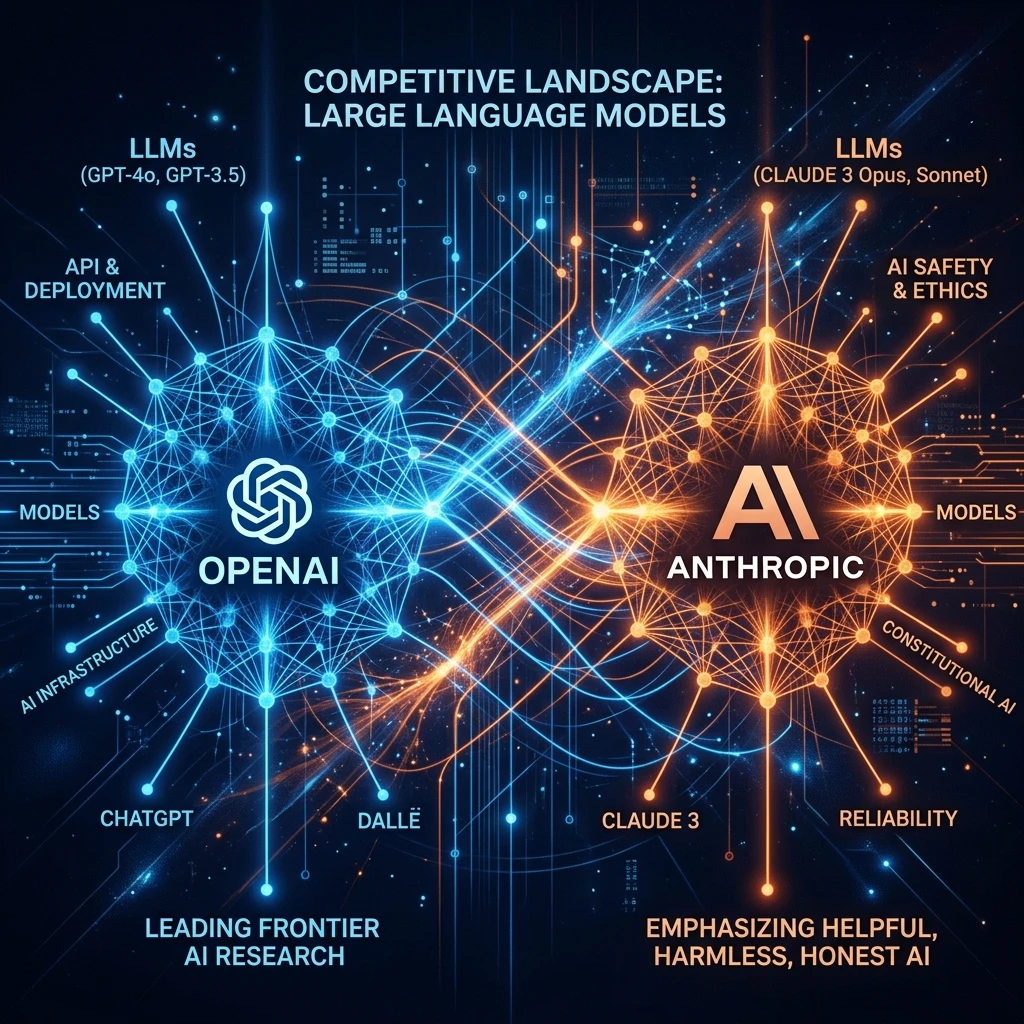
- The Philosophical Divide: OpenAI operates on a philosophy of “AGI at all costs,” pushing massive multimodal capabilities. Anthropic was founded by OpenAI defectors prioritizing “Constitutional AI” and strict safety guardrails.
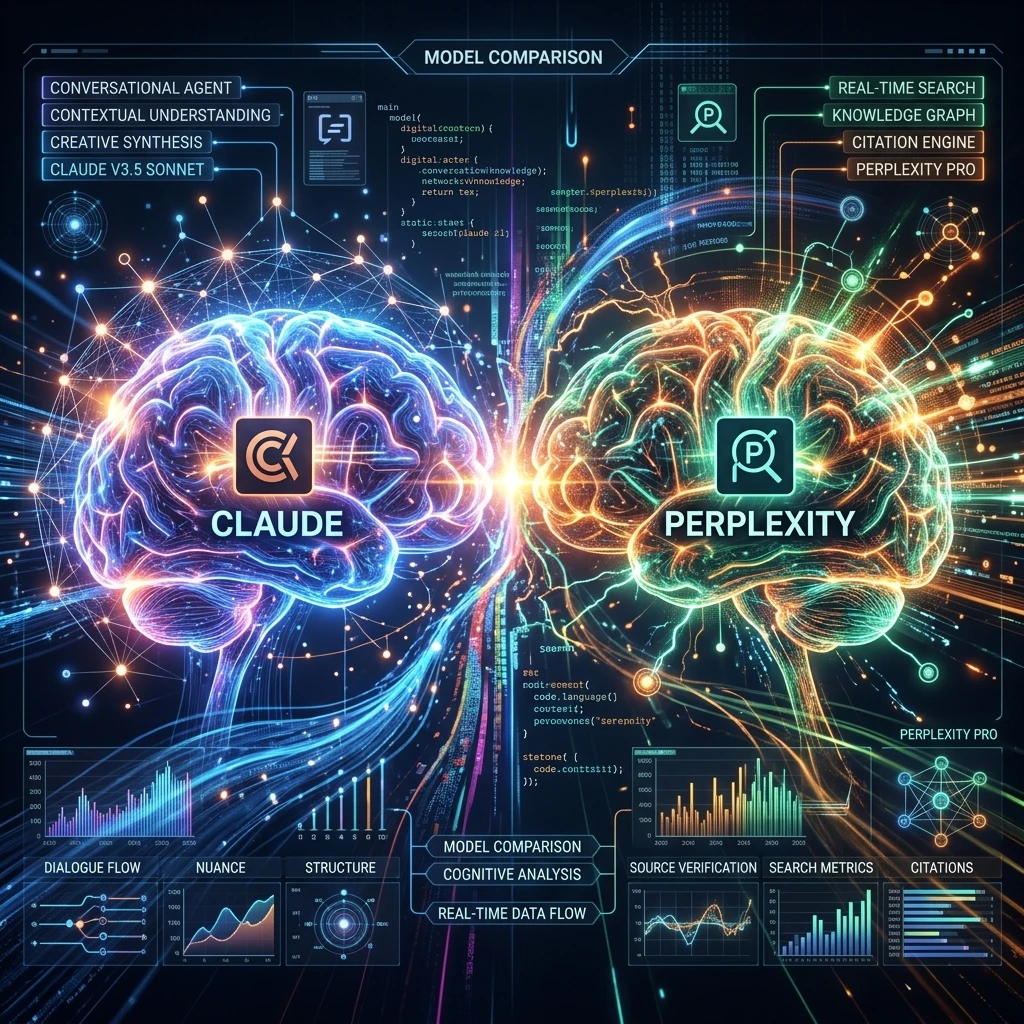
- Model Dominance: As of 2026, OpenAI’s GPT-4o remains the ultimate “Swiss Army Knife” for voice, vision, and general tasks, while Anthropic’s Claude 3.5 Sonnet is widely considered the superior engine for deep coding, writing, and logic.
- The Context Window War: Anthropic leads the industry with a flawless 200,000-token context window (perfect for analyzing 500-page legal PDFs), while OpenAI struggles with “needle-in-a-haystack” recall at extreme document lengths.
- Enterprise Security: Both companies offer Enterprise APIs with strict “Zero Data Retention” policies, but Anthropic is increasingly favored in highly regulated industries (healthcare, finance) due to its core focus on safety.
- The “Artifacts” Innovation: Anthropic revolutionized the UI layer with “Artifacts,” allowing users to render code and UI designs directly in the chat, a feature OpenAI has scrambled to replicate.
The Origins of the Rivalry
To understand the difference between the two most powerful AI companies on Earth, you must understand their history.
In the late 2010s, OpenAI was a unified research lab with a singular mission: build Artificial General Intelligence (AGI). However, as the models became more powerful, a deep philosophical schism occurred. CEO Sam Altman wanted to commercialize the technology rapidly to fund the astronomical compute costs. A faction of top researchers, led by Dario Amodei, felt the company was moving too fast, prioritizing product launches over AI safety.
In 2021, Amodei and his team left OpenAI to found Anthropic. Their mission was to build a “Constitutional AI”—a model governed by a strict, unbreakable set of ethical rules rather than human-curated safety patches.
Today, this philosophical split defines how their products behave. For AI Business leaders, choosing between OpenAI (ChatGPT) and Anthropic (Claude) is not just a software choice; it is a strategic architectural decision.
OpenAI: The Unstoppable Juggernaut
OpenAI is the Apple of the AI world. They possess unparalleled brand recognition, massive funding (heavily backed by Microsoft), and a culture of relentless shipping.
The GPT-4o Ecosystem:
OpenAI’s flagship model, GPT-4o (the ‘o’ stands for omni), is designed to be the ultimate multimodal assistant. It does not just process text; it processes audio and vision natively in real-time.
- Voice Mode: ChatGPT’s voice mode is so fast and emotionally expressive that it feels like talking to a human on a phone call. It can detect sarcasm, interrupt smoothly, and translate languages in real-time.
- Vision and Image Generation: OpenAI owns DALL-E 3, which is natively integrated. You can ask ChatGPT to write a children’s story and instantly generate the illustrations.
- Advanced Data Analysis: ChatGPT has a native Python execution environment. It can write code, run the code, analyze Excel spreadsheets, and generate visual charts entirely within its own sandbox.
OpenAI’s strategy is to be the “Everything App” for consumer and enterprise intelligence.
Anthropic: The Methodical Genius
Anthropic does not care about building an “Everything App.” They don’t have native image generation, and their voice mode is rudimentary compared to OpenAI. Anthropic cares exclusively about raw, cognitive logic and safety.
The Claude 3.5 Sonnet Ecosystem:
Anthropic shocked the world with the release of the Claude 3 family, specifically the 3.5 Sonnet model, which outperformed OpenAI on nearly every major coding and reasoning benchmark.
- Constitutional AI: Claude is remarkably difficult to “jailbreak.” It refuses to write malicious code or generate hate speech because safety is baked into its core neural weights, not slapped on as an afterthought.
- The Artifacts UI: Anthropic realized that text output is often insufficient. If you ask Claude to code a React dashboard, it opens a side panel (an “Artifact”) and renders the fully interactive website right there. You can click the buttons and test the code without ever opening a terminal.
- The 200K Context Window: Claude has a legendary memory. You can upload an entire Harry Potter book, and it will remember a minor detail from chapter two perfectly. OpenAI’s models often suffer from “lost in the middle” syndrome when fed massive documents.
Head-to-Head: Coding and Development
Winner: Anthropic (Claude 3.5 Sonnet)
While GPT-4 is an exceptional coder, the global community of senior software engineers has overwhelmingly migrated to Claude 3.5 Sonnet for complex architectural work.
- The Logic Gap: If you ask GPT-4 to refactor a massive, 1,000-line Python script, it will often introduce subtle “breaking changes” because it loses track of the global logic. Claude maintains the architectural integrity flawlessly.
- IDE Integration: Tools like Cursor (the leading AI code editor) allow users to switch between models. Telemetry data shows that professional developers use Claude 3.5 Sonnet for roughly 80% of their actual coding tasks, reserving GPT-4o for quick debugging questions.
Head-to-Head: Writing and Creative Synthesis
Winner: Anthropic (Claude 3.5 Sonnet)
OpenAI has a massive “tone” problem. If you ask ChatGPT to write an email, it will almost always include the words “delve,” “robust,” “tapestry,” or “unlock.” It writes with a highly enthusiastic, distinctly robotic cadence that screams “AI-generated.”
Claude writes like a human. It uses varied sentence structures, subtle nuance, and can perfectly mimic a specific brand voice if you provide examples. For copywriters, marketers, and authors, Claude is the only model that produces text that doesn’t require 30 minutes of heavy editing to sound authentic.
The Enterprise API Landscape
When integrating these models into custom enterprise software, the considerations change.
OpenAI API (via Microsoft Azure):
- Pros: Unmatched scalability. Because it runs on Azure infrastructure, massive Fortune 500 companies trust its uptime. The API gives you access to text, DALL-E 3 (images), and Whisper (audio transcription) under one billing account.
- Cons: Slower inference speeds during peak global hours.
Anthropic API (via AWS Bedrock or direct):
- Pros: Deep document analysis. If a law firm is building a tool to instantly read 500-page PDF discovery files, the Anthropic API is the only one with a reliable enough context window.
- Cons: Strict rate limits. Anthropic is notoriously conservative with how many API calls a new developer can make per minute, which can throttle high-volume applications during the testing phase.
Pros & Cons of Each Ecosystem
OpenAI (ChatGPT) Pros & Cons:
Pros:* True multimodal capabilities (flawless voice, vision, and DALL-E 3). Advanced Data Analysis makes it a powerhouse for Excel users. Custom GPTs allow for easy agent creation.
Cons:* Suffers from a recognizable “robotic” writing tone. Prone to losing context in massive documents.
Anthropic (Claude) Pros & Cons:
Pros:* The absolute best AI for writing natural English and coding complex software. The Artifacts UI is revolutionary. Flawless memory across massive 200K token documents.
Cons:* No image generation. Occasionally, its “Constitutional AI” makes it overly sensitive, refusing to complete harmless tasks if it misinterprets the context as dangerous.
Expert Insights
“The war between OpenAI and Anthropic is the best thing that could have happened to consumers. Their rivalry is forcing both companies to innovate at breakneck speed. My advice to business owners is simple: Do not get locked into one ecosystem. Use OpenAI for your marketing team’s image generation and data analysis. Use Anthropic for your engineering team’s code generation and your legal team’s document review. The future belongs to the model-agnostic.” — Himanshu, Senior AI Automation Engineer
Frequently Asked Questions (FAQ)
Which subscription is better for a general user, ChatGPT Plus or Claude Pro?
If you only want to pay for one $20/month subscription, ChatGPT Plus is the better choice for the average user. It provides a complete toolset: web browsing, data analysis, image generation, and the voice app. Claude Pro is for power users who strictly need elite coding and writing capabilities.
Is my data safe with both companies?
If you use their free consumer tiers, your data may be used to train future models. If you use their paid Enterprise tiers or access them via their developer APIs (or through AWS/Azure), both companies offer strict “Zero Data Retention” policies, ensuring your proprietary data is completely secure.
Will one company eventually monopolize the market?
Unlikely. The open-source community (specifically Meta’s Llama models) is aggressively closing the gap. The future of AI is not a monopoly; it is a commoditized market where intelligence is as cheap and accessible as electricity.
Conclusion
The dichotomy between OpenAI and Anthropic represents the two driving forces of the AI revolution: relentless multimodal expansion versus deep, methodical cognitive reasoning. OpenAI wants to build a machine that can see, hear, and speak to you seamlessly. Anthropic wants to build a machine that can read a textbook in 10 seconds and write a flawless, bug-free software architecture. By understanding the distinct strengths of both ecosystems, AI Reviews readers can architect sophisticated, multi-model workflows that leverage the absolute best of both worlds. The AI era has arrived, and it speaks in two distinct, incredibly powerful voices.